Langhe, here's how to discover this magnificent area of Piedmont.
The hills of the Langhe, Roero and Monferrato, Piedmont's wine-growing landscapes, are part of the UNESCO World Heritage (here you can find all the UNESCO World Heritage Sites in Italy) and are places you absolutely must visit at least once in your life.
The Langhe extend along the provinces of Cuneo and Asti and are the place of production of fine wines such as Barolo, Nebbiolo, Barbera and Dolcetto, some of the best wines in the whole of Piedmont.
The Monferrato area, on the other hand, lies between the provinces of Asti and Alessandria and is the home of wines such as Moscato d'Asti. Finally, the Roero area is located in the north-eastern part of the province of Cuneo and is known for wines ranging from Roero Arneis to Roero superiore, less well-known than the other two but just as beautiful.
READ ALSO: WINE ROADS, THE ITINERARIES NOT TO BE MISSED
The Langhe
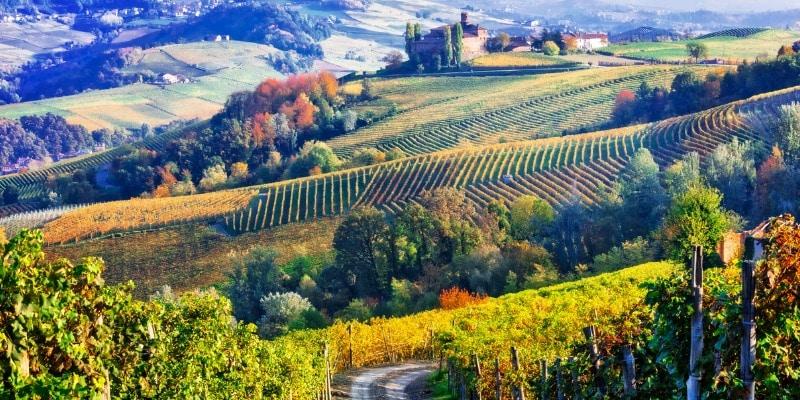
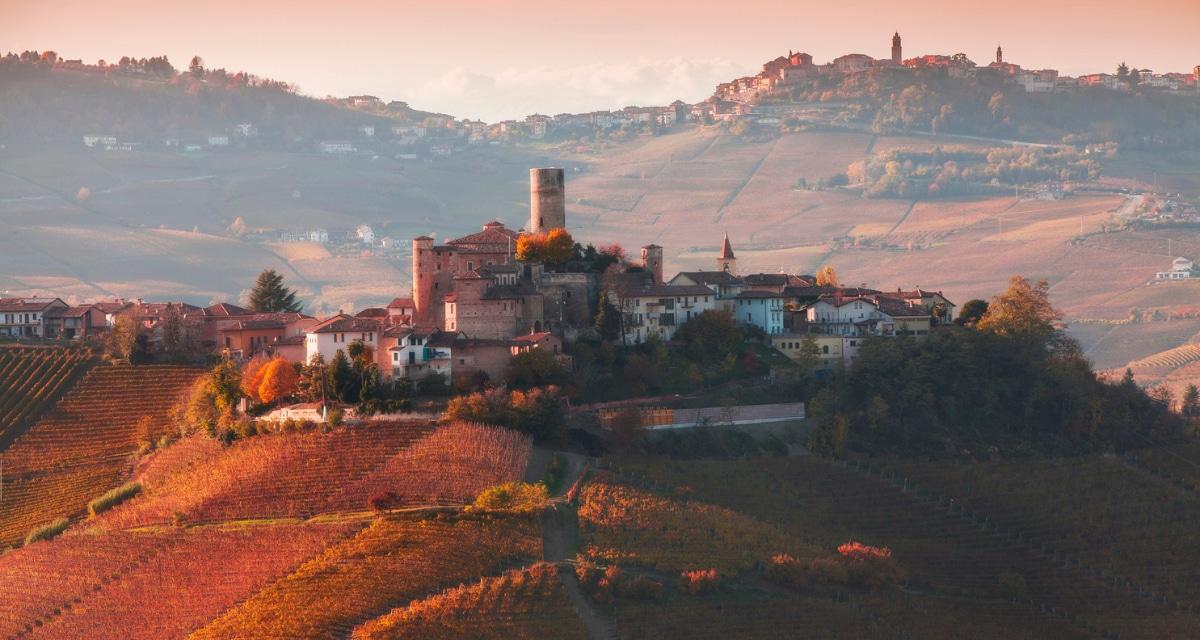
Why visit the Langhe? For the wines and hilly landscapes covered in vineyards and transformed by the skilful and patient work of man, for the silence and to eat in an old farmhouse where you can regain a privileged relationship with the flavours and the land. And then there are villages frozen in time, historic monuments and parish churches, wine cellars and castles, and the places of Cesare Pavese, who wrote so much about this area.
The Langhe are beautiful in all seasons of the year, although it is in autumn that they are most exciting, because that is the best time to taste the gastronomic delights and discover all the secrets of wine. Below is a guide to what to do and see in the Langhe area with tips on what to eat and the wineries you can visit.


What to see in the Langhe
What are the most beautiful places to see in the Langhe? We have selected the unmissable villages and things to do in a list of the best to visit in the historic Langhe region (here you can find the most beautiful villages to see in Piedmont).
Alba
Alba is one of the most famous villages in the Langhe, famous for its prized white truffle. The town has a circular layout and fortified perimeter and houses.
Don't miss a visit to the interior of the Duomo, which is unsurprisingly imposing.
After a visit to Alba, the capital of the Langhe, follow the signs for Diano d'Alba. Once in the centre, a stop at the municipal wine cellar is a must, to learn about and taste the main local wines.
Barolo
Continue on to Barolo. The hillocks follow one another as far as the eye can see and you will be enraptured by the quantity of vines. Visit the castle of the Marchesi Falletti di Barolo, where Silvio Pellico and Giulia di Barolo lived, which houses the very interesting Wine Museum and the historic cellars where Barolo wine was born in the mid-19th century.
The tour continues with panoramic wine cellars and tasting of the best labels from the eleven Langhe villages that produce Barolo. Among the local dishes, do not forget a plate of tajarin al sugo d'arrosto, the long fresh pasta of the regional tradition. The more curious can visit, after lunch, the Corkscrew Museum, a stone's throw from the castle.
Among the addresses not to be missed is the Fattoria Cà San Ponzio, an old Langa farmhouse surrounded by greenery in a panoramic position.
Grinzane Cavour
We move on to Grinzane Cavour, a name linked to the Piedmontese statesman Camillo Benso Count of Cavour, who was born and stayed here for 17 years. Treat yourself to a visit to the castle, home to the regional wine shop, the ethnographic museum and the world-famous Alba white truffle auction. Inside the castle is the Ethnographic Museum, which tells the story of the truffle. There is also an 18th century distillery, original furniture, manuscripts and Cavour's tricolour sash from when he was mayor of Grinzane.
Meat lovers can try the bollito misto, perhaps accompanied by a good Barbera d'Alba, a ruby red wine with a dry flavour. Among the addresses to be noted in the agency is the Le Ginestre farm, a stone's throw from the castle.
Serralunga
Here, too, there are hills and a hilltop manor looking out over a sea of vineyards. Visit the interior of the castle and the Salone dei Valvassori with its perfectly intact 15th-century frescoes.
Among the must-see addresses is the Cascina Meriame, a typical farmhouse surrounded by vineyards with a view of the Langa hills.
House of Cesare Pavese
Cesare Pavese's birth house is located in Santo Stefano Belbo, a small village that, if you love Pavese's novels and writings, you will certainly have heard of. Inside the house are letters and memorabilia of the writer.
It is located at 20 Via Cesare Pavese and is open on Saturdays, Sundays and holidays from 8:30 to 12:30 and from 14:30 to 19:00.
Bergolo
Bergolo is the smallest village in the Langhe. Isolated from the other villages, it is a true oasis of silence and high quality accommodation. If it is also known as the village of stone it is because of the houses all made of local sandstone and the streets paved with the same stone.
Novello Castle
Also in the small village of Novello, famous for the production of Barolo wine, there is a beautiful 20th century castle, built in neo-Gothic style, which is definitely worth a visit.
Barbaresco
In the small, quiet Barbaresco, don't miss a visit to the Enoteca del Barbaresco, housed inside the deconsecrated church of San Donato in the historic centre. Right under the ancient, thousand-year-old tower there is a restaurant to try, but there are so many addresses, especially considering that Barbaresco has only one street!
Treiso
In the small village of Treiso there is a Michelin-starred restaurant, La Ciau del Tornavento, that is a must for lovers of the genre.
Neive Langhe
Pay a visit to the village of Neive, in the province of Cuneo, included in the list of the most beautiful in Italy. It is a medieval village that, although the original castle no longer exists, still preserves its defensive character with its small red-roofed houses leaning against each other. From the top of the historic centre, there is a splendid view of the vineyards surrounding the village. Pay a visit to the vineyards and wineries housed in stately homes such as the 18th-century residence of the Counts of Castelborgo.
Tours and itineraries in the Langhe
The romantic road of the Langhe and Roero covers 130 km passing through villages, castles, wine cellars and wine shops. At the most scenic points of the route there are benches for two that make the itinerary even more romantic.
During the month of October there is the Castelli Aperti (Open Castles) event, which allows visitors to visit castles normally closed to the public in an itinerary from manor to manor.
The Strada del Barolo explores the western hills of the Langhe in 16 stages that pass through villages and wineries to discover the region's most prized wine.
Here you will find the map with all the wineries that can be visited and here all the info, stages and itineraries of the Strada del Barolo.


Langhe villages, the most beautiful to see
Alba
Barbaresco
Barolo
Grinzane Cavour
La Morra
Neive
Serralunga d'Alba
What to eat in the Langhe
Eating in the Langhe is serious business. You lunch overlooking the vineyards and dine in the warmth of the trattorias in the villages and hills. Try the agnolotti del plin, a stuffed pasta served with butter and sage. Braised beef with Barolo is a must and a traditional second course that absolutely must be accompanied by Barolo.
To get to the heart of the local tradition, try at least once the traditional Merenda Sinoira that used to be made in the countryside in the middle of the afternoon, to regain strength after the afternoon's work and before the evening's. You will eat vitello tonnato (veal in tuna sauce), anchovies in green sauce, omelettes, salami and typical Langa cheeses, including Robiola di Roccaverano and Murazzano.
Map and map
Italy
Piedmont