Bahrain, a small country on the Arabian Peninsula made up of 33 islands, has aneconomy that relies on oil, finance and tourism.
In recent years, thanks in part to the Formula 1 Grand Prix, the number of people choosing this state for a short holiday has increased dramatically, although there are not many attractions.
Whether for business or pleasure, if you find yourself in this country here are the things to see in Bahrain, cities and attractions not to be missed!
When to go to Bahrain
The climate is desert-like with two seasons: a 'winter' one, from December to February, which is mild and sunny, and a summer one, from March to November, which is hot and very humid.
Best time to visit: The best time to visit is from October to mid-April, as the climate in these months is warm but temperate and you will not find the prohibitive temperatures that there are in the summer months.
Period to avoid: As with the entire Arabian Peninsula, the worst months are July, August and September, when the high temperatures are made even more unbearable by the humidity of the Persian Gulf.
What to see in Bahrain
1 - Al Fateh Mosque
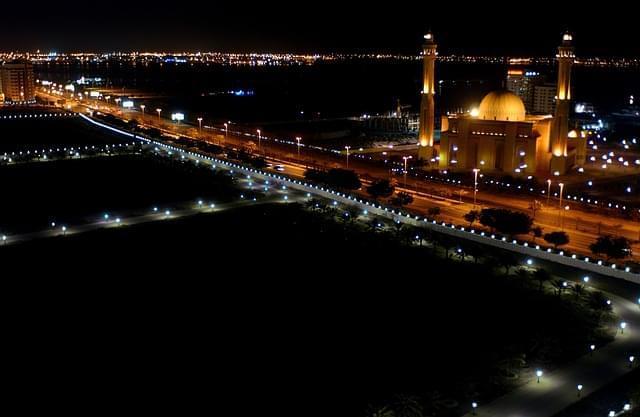 In the capital Manama stands this imposing Mosque, one of the largest in the world, which can hold up to 7000 worshippers and attracts many visitors every year.
Al Fateh features a fibreglass dome and two minarets and inside there are numerous decorative elements such as carved wooden lamps, carpets and the huge Swarovsky chandelier.
Guided tours are organised to provide an in-depth insight into the structure. Admission requires appropriate attire, women must wear the abaya (the long black gown that covers the entire body except for the feet, hands and head) and a head veil; everyone must then remove their shoes. It is open from Saturday to Thursday from 9 a.m. to 4 p.m., on Fridays only for worshippers.
2 - A'ali Village Necropolis
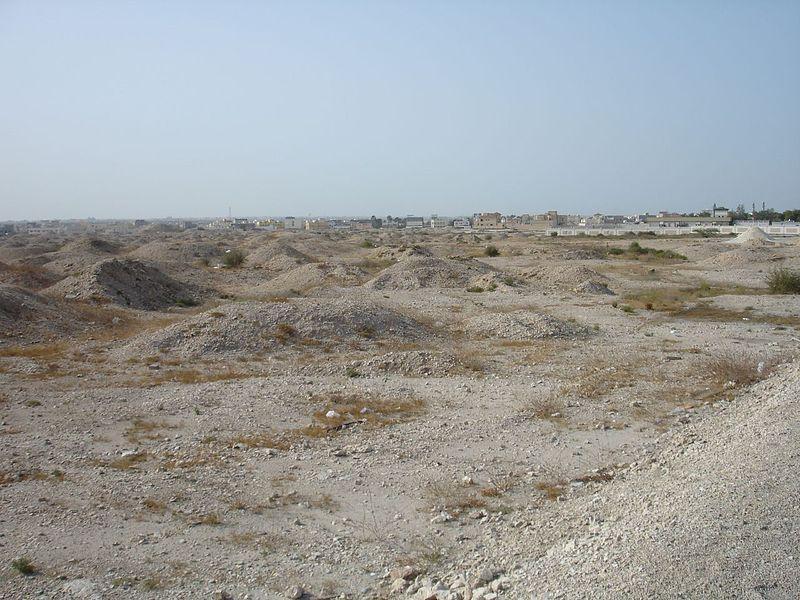 Photo by Step. Not far from the capital Manama is this necropolis consisting of 170,000 tombs bearing witness to the mysterious Dilmun civilisation that was active from the third millennium BC.
The tombs look like man-made mounds of varying sizes, some are 15 metres high, and archaeologists have been able to discover that this Bronze Age civilisation engaged in trade with other peoples of the Persian Gulf.
3 - National Museum
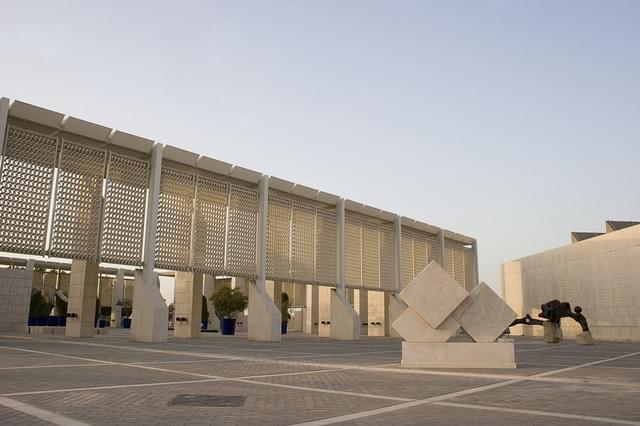 Photo by Anthony DeCosta. This important museum is located in the capital Manama, was built in the late 1980s and occupies an area of about 28,000 square metres.
It has many well organised and subdivided exhibition spaces, with captions in both English and Arabic, and visitors can quickly gain an overview of the local culture and trade between Mesopotamia and the East.
A modern art gallery that nevertheless exhibits ancient artefacts! The museum is open Monday to Sunday from 8am to 8pm and admission costs 1 BHD (approximately €2.40).
4 - The Qal'at al-Bahrain Fort
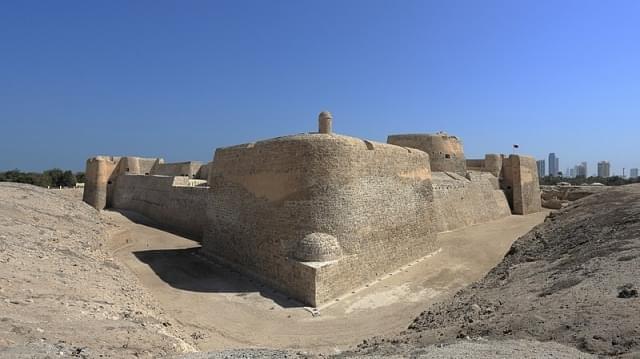 Photo by Martin Falbisoner. Qal'at al-Bahrain is the 16th century fortress built by the Portuguese in Manama, the capital of Bahrain, and is one of the main attractions of this state.
The fort, a Unesco World Heritage Site, is surrounded by a moat and inside there are some very beautiful ruins that at sunset time are very impressive.
Inside the site there are a number of plaques with explanations of the different historical periods that characterised this place. From here, one can admire a beautiful view of the city skyline.
It can be visited from Monday to Sunday from 8 a.m. to 8 p.m. Admission is free.
5 - Muharraq, the Pearl Production District
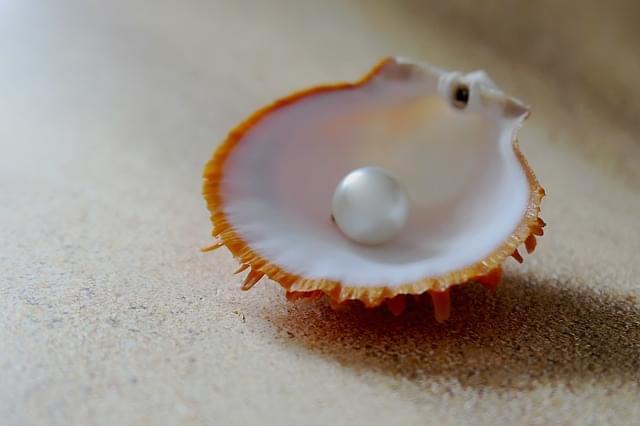 Bahrain is famous for its precious pearls of excellent quality, so much so that in recent years the harvesting of oysters has increased exponentially to meet demand from around the world.
On the island of Muharraq is the 'district' from where many boats specialised in the harvesting of these precious shells depart and also in this district are warehouses, jewellers' shops and residences of the merchants dedicated to pearl processing.
A word of advice: if you intend to buy these gems, be aware that prices here are much more affordable than in the rest of the world!
6 - Sakhir Circuit
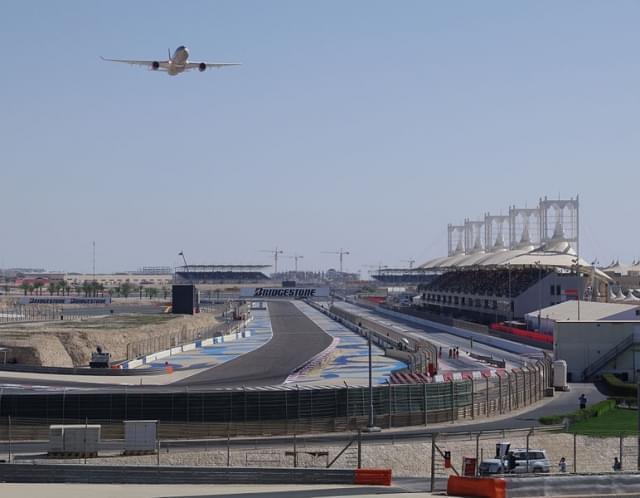 Photo by Derek Morrison. In recent years, Bahrain has become famous thanks to the Formula 1 Grand Prix. The country spared no expense to host the circuit and built a spectacular and high-tech track in the middle of the desert.
The Sakhir circuit puts the drivers to the test, not so much because of its difficulty, but because of the climatic conditions in which they are forced to race: sand on the asphalt, considerable temperature range despite the fact that techniques and products are used to limit the phenomena.
So, if you come to Bahrain, take a tour around here even if it is not Formula 1 season: with guided tours, you will be taken up to the control tower, see the multimedia centre, the press room and the circuit. Tours are by appointment only and cost 6 BHD (about €13.00).
7 - Janabiya Royal Camel Farm
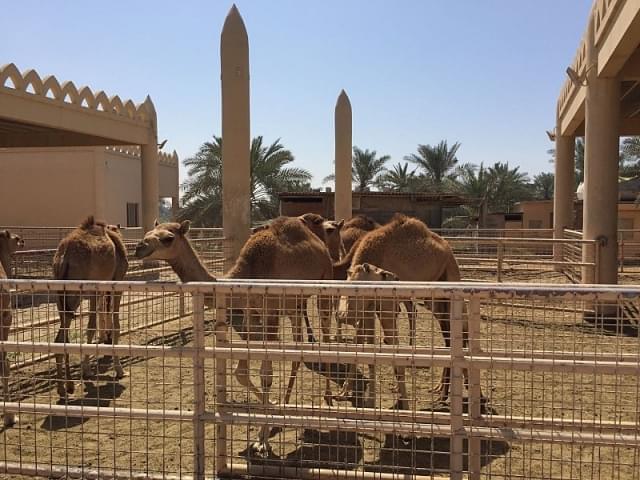 The Bahraini royal family owns a camel farm in Manama which can be visited. The excursion, suitable for young and old, allows you to get close to the animals, photograph them and feed them safely. The females are usually kept apart with their young and always arouse great tenderness.
By giving a small tip to the guards, it is even possible to ride one!
The only caution after being here is to wash your hands well and disinfect them because camels often carry diseases. The farm is open Monday to Sunday from 8am to 6pm and admission is free.
8 - Bab el-Bahrain Souk
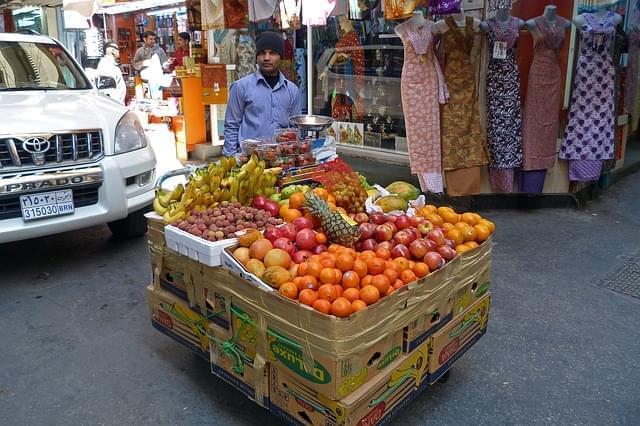 During your stay in Bahrain, you should not miss a visit to the Manama Souk, which is located north of the city, near the twin towers of the Financial Harbor.
However, don't expect the Arab markets typical of Morocco, Egypt or Tunisia because Bab el-Bahrain is characterised by a collection of alleys where a little bit of everything is sold: electrical appliances, fruit, and spices.
However, the added value is the people who frequent it, completely different from the rich sheiks one encounters in the modern quarter or in luxury hotels. This souk is open daily, except Fridays, from 9am to 12.30pm and from 4pm to 8pm.
9 - Bahrain World Trade Centre
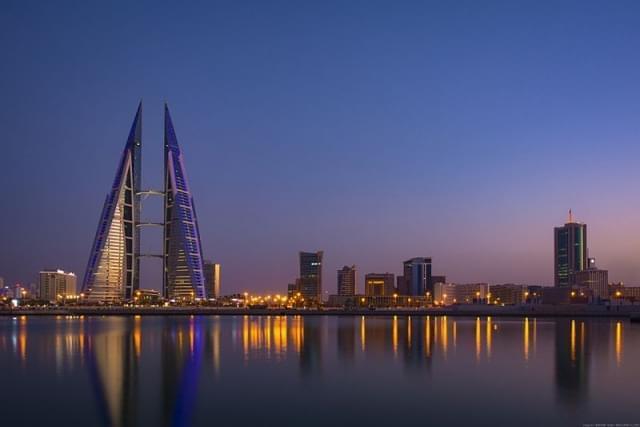 Photo by B.alotaby. This huge skyscraper, right in the centre of Manama, is a symbol of Bahrain's modernity and sustainability.
Featuring two sails of 50 storeys each 240 metres high connected by two wind turbines each 29 metres in diameter, it was built in a 'green' way. In addition to harnessing wind energy, it is also equipped with systems for recycling waste water and relies on solar energy.
Inside is one of the largest shopping malls in the world with shops of the biggest fashion brands including Louis Vuitton, Gucci, Bulgari and many others.
It is open every day, except Friday and Saturday, from 9am to 5pm.
10 - The Lagoon
In the heart of Amwaj Island, you'll find this huge seafront shopping centre with numerous clubs, restaurants, shops and public spaces where you can spend your evenings with friends.
Featuring a modern design, it covers an area of 55,000 square metres and its 77 outlets are open 12 hours a day. In addition, The Lagoon often hosts cultural events, exhibitions, concerts, festivals and in the 'cooler' months an open-air market.
There are also numerous areas dedicated to children with dedicated games and shows.
Recommended itineraries
7-day itinerary: The most important urban centres from north to south between past and present
Day 1: Arrival in Manama and transfer to hotel;
Day Two: morning visit to Manama with Bahrain National Museum, Beit Sheikh Isa bin Ali (historical palace); second part of the visit to Manama with World Trade Center and Financial Harbour, Al-Fateh Grand Mosque, Souk of Bab el-Bahrain, Gold City, one of the largest, most typical and important jewellery shops in the city;
Day 3: Arrival and sightseeing with Qal'at al-Bahrain (Old Port and capital of Dilmun) + Bani Jamrah;
DayFour: Visit along the inland road to A'ali, one of the largest cities in Bahrain and visit the archaeological site of tombs and mounds, Royal Tombs, traditional pottery workshops with pottery production and Ain Al Adhari, a seaside tourist centre with a theme park for children;
Fifth day: visit to Ar Rifà, first in the eastern part residence of the King of Bahrain Hamad ibn Isa Al Khalifah, then in the western part with a visit to the most nelli and typical bazaars + fort of the same name;
Day six: return to the north to the island of Muharraq with a quick visit to the town of the same name with Bahrain Pearling Trail, sweet market, Siyadi House;
Day 7: return to the north and transfer from the airport to Italy.
How much does it cost? Price details
Price per person from: €1,500.00 per person
Price includes: return flight, hotel, breakfast, transfers, guide in Italian, entrance fees to museums and various attractions
Theprice does not include: various meals, drinks, tourist visas, various purchases and personal expenses
8-day itinerary: Bahrain between archaeology, sea and fun
Day 1: arrival in Manama and transfer to the hotel;
Day two: visit to Al Hajar in the morning and Barbar (in the middle of the desert) in the evening, important archaeological sites near the village of Diraz + necropolis from the Sumerian and Hellenistic periods and temples dedicated to Enki, the god of wisdom;
Day 3: Visit to Al Budaiya on the west coast, with a visit to the village farms and Budaiya beach + Royal Camel Farm;
DayFour: Visit to the outskirts of Zallaq with Wasmiyah beach, a day of wellness at a beachfront spa hotel, and a visit to the Sahkir circuit a few kilometres away;
Day Five: Visit Al-Areen Wildlife Park, a nature reserve with endangered aquatic and wild animal species from the Middle East and North Africa + Dilmun Water Park, the largest water park in the kingdom;
Day six: Shajarat-al-Hayat, the tree of life in the south-east of the Bahraini desert, 2 km from the Smoke Mountain (Djebel Dukhan), and Oil Museum (museum of the history of oil);
Day Seven: Departure for the north with a visit to Fort Arad and Hidd in the afternoon;
Dayeight: return flight to Italy.
How much does it cost? Price details
Price per person from: €2,000.00 per person
Price includes: return flight, hotel, breakfast, transfers, guide in Italian, entrance fees to various attractions
Price does not include: various meals, drinks, tourist visas, various purchases
What to know for a trip to Bahrain
Where is it located and how to get there
Bahrain is a state formed by a group of 32 islands in the Persian Gulf and is just a few kilometres east of the coast of Saudi Arabia and north-west of Qatar.
Themain island is Bahrain followed by Muharraq and Hawar; the archipelago is sandy and coral but some islands are formed of limestone.
Getting around
Bahrain, especially in the north, has an efficient public transport network.
To stay around the capital or to go as far as Riffa, simply use the extensive bus network.
Within Manama and also in the other, main, cities, taxis are also efficient, however watch out for the taximeter, check that the right fare is charged.
In general, for getting around outside the cities, you should rely on guides or tour operators. You could also hire a car, but we do not recommend this solution (care should be taken, especially in desert areas).
For excursions into the desert, perhaps with camels, or to stay longer on the beaches of the atolls and also visit Hawar Island, it is advisable to rely on private tours, or resorts that organise the travel
Security, visa and documents required
Entry requirements: passport with residual validity of at least 6 months; tourist visa, valid for 2 weeks, obtainable at the airport of arrival (BHD 5, €12.00 approx.).
Vaccinations: no vaccination required
Restrictions: passport must not contain an Israeli visa; during Ramadan it is forbidden to eat, drink and smoke in public, under penalty of imprisonment; homosexuality, drunkenness and prostitution are illegal.
Security: quite safe, however do not go to the south because it is a military zone; before leaving, consult the Bahrain section on the Farnesina website
Useful advice: respect the country's rules, make only neutral judgments on the subject of "Islam" and respect places of worship; maintain an attentive and vigilant attitude throughout your stay; for excursions in the desert, rely on a specialised agency
Informed travel: useful information
Inhabitants: about 1,425,000
Capital: Manama
Languages: Arabic and English
Local currency: Bahraini Dinar (BHD) / €1.00 = 0.41 BHD
Time zone: +2 h with respect to Italy; +1 h with daylight saving time
Distance from Italy: 3,878 km (7-8 with stopover) from Rome to the capital Manama